FA BUT co-organised an international workshop on planning in peripheral areas
How should we plan the development of peripheral, rural and border regions? And how can we ensure that spatial planning gives due consideration to issues, places and population groups that tend to be sidelined? These were the questions addressed at the international AESOP PhD Workshop 2026, which took place from 22 to 25 September in Drosendorf, Austria. It was jointly organised by the Faculty of Architecture and Spatial Planning at TU Wien and the Faculty of Architecture at VUT.
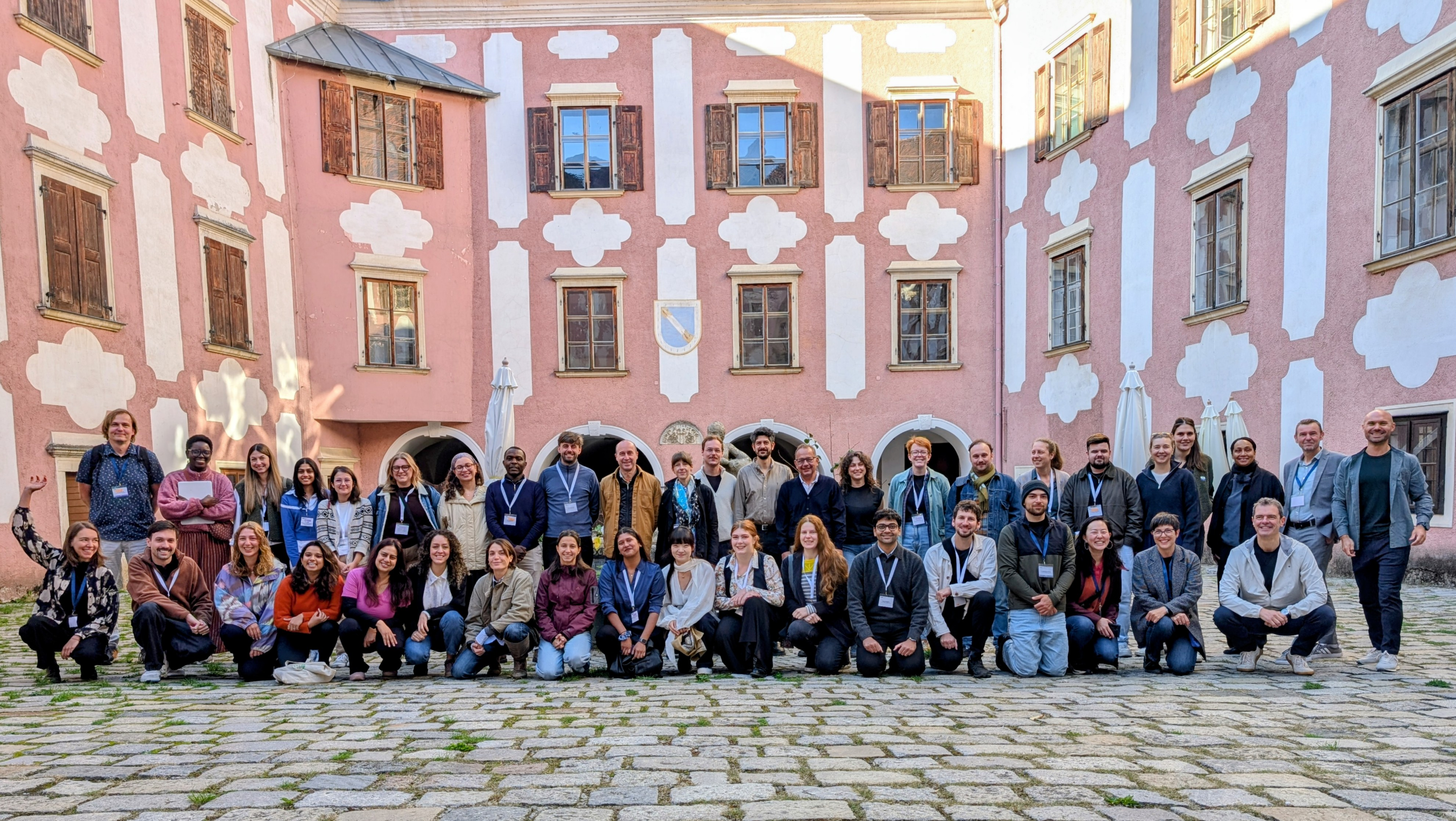
The four-day workshop, entitled ‘Spatial Planning at the Fringes’, brought together PhD students specialising in spatial planning with mentors from international universities. During thematic sessions, participants presented their research, discussed the methods they used and received individual feedback from experienced academics.
Spatial planning in the spotlight
The workshop’s theme was based on current social, environmental and geopolitical changes that are challenging existing approaches to spatial development and calling for new approaches to planning. The organisers did not interpret the term ‘fringes’ solely as the physical edges of cities and regions. They also included marginalised areas and groups, social and ecological limits, innovative approaches and as yet less-explored methods of planning research. The aim was to move these topics from the margins to the centre of the professional debate.
“Spatial planning is no longer on the periphery of interest. On the contrary, there is increasing pressure and growing expectations placed upon it. These are often contradictory in terms of the ability to respond flexibly to social or environmental changes and to enable both the transformation and stabilisation of the territory. We are delighted that the Faculty of Architecture at BUT is part of the international debate, thanks in part to its co-organisation of this year’s AESOP PhD workshop. Furthermore, we were able to build on our long-standing partnership with TU Wien,” said Jan Malý Blažek, the workshop organiser on behalf of the Faculty of Architecture, Brno University of Technology.
.jpg)
International mentors and sharing of experiences
The workshop programme combined presentations of doctoral research, discussions, interactive sessions and individual consultations. The opening lecture, ‘One Health City: A Framework for Evaluating and Envisioning More Ecological and Democratic Urban Futures’, was delivered by Christian Werthmann and Christian Corral from Leibniz University Hannover. Participants also addressed academic publishing and practical issues related to doctoral studies.
The mentoring team consisted of Robin Chang (RWTH Aachen University), Tijana Dabovic (University of Belgrade), Alexander Hamedinger (TU Wien), Dominic Stead (Aalto University), Renée Tribble (Technische Universität Dortmund) and Daniel Galland (Aalborg University). The international composition of the team enabled participants to gain diverse perspectives on urban, regional and transport planning, as well as sustainable development, and to place their own research within a broader European context.
Supporting European cooperation
“International events such as the AESOP PhD Workshop 2026 in Drosendorf and Znojmo show us that the issues resonating in contemporary spatial planning are common across Europe, even if we sometimes view them from different perspectives. It is good that we are able to act as equal partners with colleagues from other universities in this debate,” said Lenka Štěpánková, Vice-Dean for Creative Activities and Doctoral Studies.
Part of the programme took place in Znojmo. Participants visited Loucký Monastery and took part in a panel discussion moderated by Lenka Štěpánková from FA BUT, entitled ‘Experiment at the Fringes’, which focused on urban development planning in changing social and geopolitical conditions. The cross-border connection between Drosendorf and Znojmo also directly tied in with the theme of peripheral and border regions, the development of which was the focus of the workshop.
The workshop was organised by the Young Academics network, which forms part of the Association of European Schools of Planning. It was financially supported by EULiST, an alliance of European universities bridging society and technology, of which BUT is also a member.
| Inserted by: | Rychnovská Anna Mgr. |
|---|---|
| Inserted | |
| Last updated |